From the Association des fanfares amateurs de la province de Québec to FHOSQ
The origins of the Fédération des harmonies et des orchestres symphoniques du Québec (FHOSQ) can be traced back to 1927. To mark the 50th anniversary of the Union musicale de Trois-Rivières, a major celebration was organized, bringing together bands from across Quebec in a parade through the city. The festivities concluded with a banquet attended by leading musical figures from Trois-Rivières and throughout the province.
During the event, Frank Meerbergen, then musical director of the Laurentides band of Grand-Mère, delivered an inspiring speech:
“This day is one of the happiest of my life since arriving in Canada. It reminds me of the many festivals in which I participated in my native Belgium. I hope that an association of bands will be formed and that annual music festivals will be organized in various cities across the province of Quebec.”
His remarks generated considerable enthusiasm and, a few months later, delegates from several bands gathered to establish the Association des fanfares amateurs de la province de Québec.
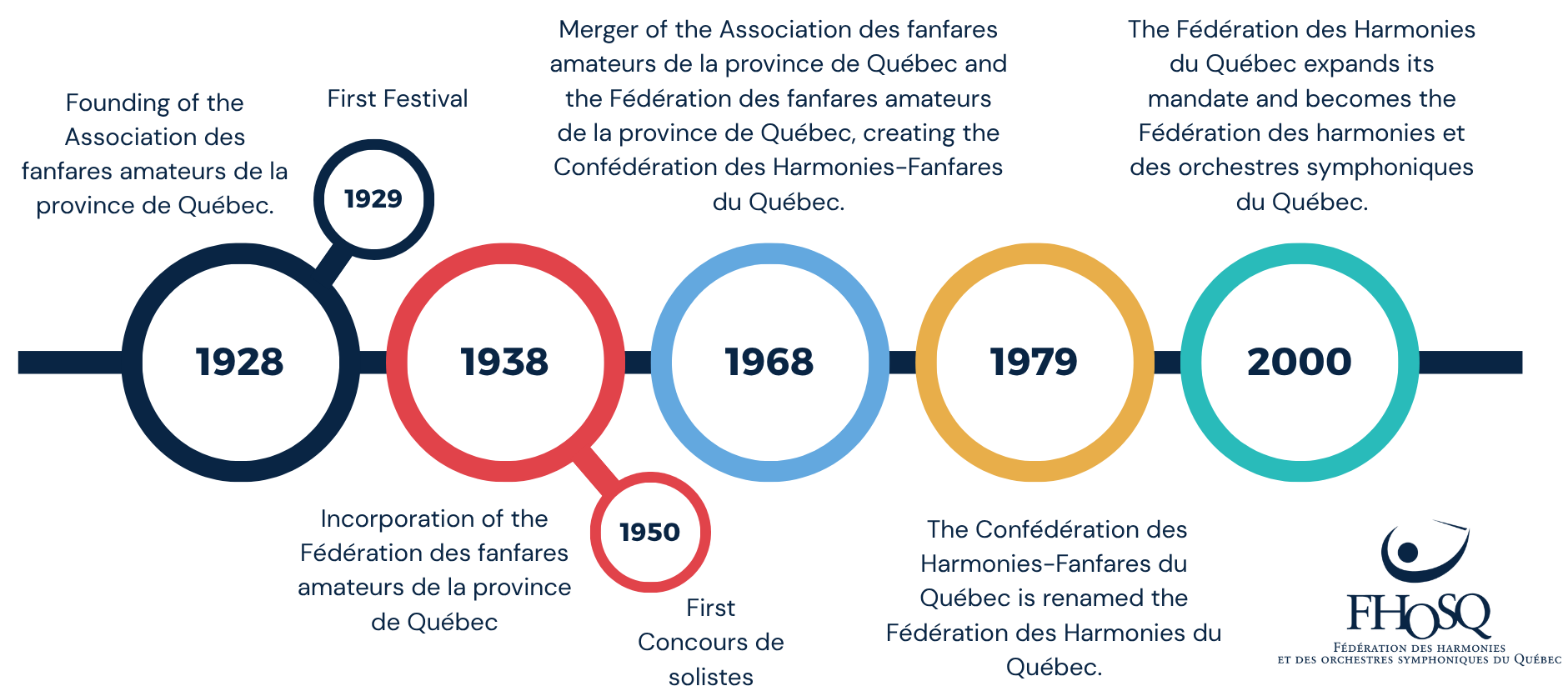
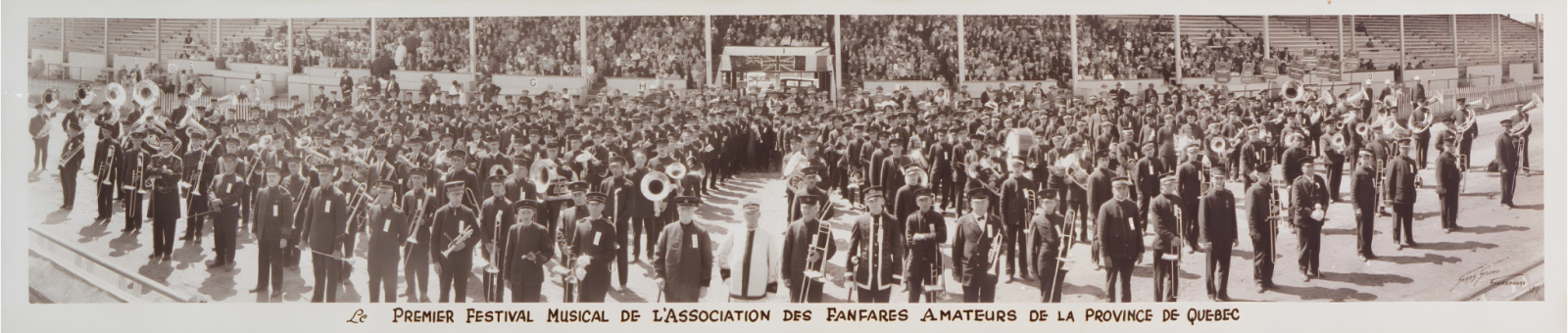
The very first Festival des harmonies was held in Sherbrooke in 1929. Six ensembles took part, and participation grew steadily with each subsequent edition.
In 1938, the Association des fanfares, whose activities had been primarily centered in the Eastern Townships, created a new organization, the Fédération des fanfares amateurs de la province de Québec, in order to extend its reach to other regions of the province.
Beginning in 1950, the Association recognized that the future of concert bands depended on the individual training of young musicians. This led to the creation of the Concours solistes for wind instruments, which brought together seven participants in Granby during its inaugural year. Participation increased steadily, reaching a peak of nearly 1,000 competitors in 1998.
In 1963, under the leadership of Harry Tinker, the format of the Festival began to evolve. Previously focused on concerts and parades, the event introduced a competitive component. Professional bands were also invited to perform at the Festival’s closing concert.
It was also during the 1960s that the Union musicale de Plessisville is believed to have become the first ensemble to welcome a female musician into its ranks.
In 1968, at the initiative of the ministère des Affaires culturelles, the Association des fanfares amateurs de la province de Québec and the Fédération des fanfares amateurs de la province de Québec merged to form a single organization known as the Confédération des Harmonies-Fanfares du Québec. In 1979, the organization was renamed the Fédération des Harmonies du Québec.
On October 28, 2000, members meeting in a general assembly adopted amendments proposed by President Pierre Mailhot to expand the organization’s mandate to include symphony orchestras and string ensembles. As a result, the corporation became the Fédération des harmonies et des orchestres symphoniques du Québec.
Beginning in 2001, the growing popularity of the Festival and increasing scheduling demands led to the division of its activities into two separate events: the Festival des harmonies, which remained in Sherbrooke, and the Concours solistes, which moved to Victoriaville. Both events became semi-autonomous organizations governed by the Federation.
In 2023, following a decline in school music programs and the instability caused by the COVID-19 pandemic, the Fédération des harmonies et des orchestres symphoniques du Québec brought the governance of both events back under a single organization based in Montreal. This was followed by a major restructuring effort aimed at centralizing operations and improving the quality of services offered to members.
In 2027, for the first time in 26 years, the Concours solistes will once again be reunited with the Festival des harmonies.
The Festival des harmonies has been presented almost every year since its first edition in 1929. The only exceptions were 1942, 1943, and 1944 due to gasoline rationing during the Second World War, and 2020 due to the global COVID-19 pandemic.
To learn more, consult the historical document (in French only) produced for FHOSQ’s 75th anniversary.

_250x250%202.svg)